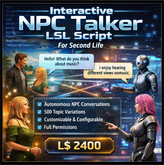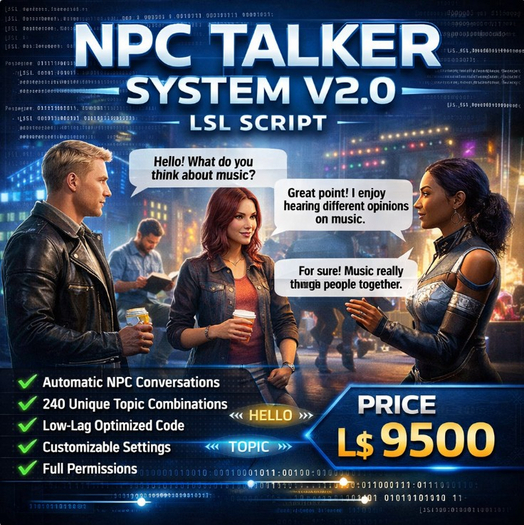

Bring life, atmosphere, and immersive social interaction to your virtual spaces in Second Life with the powerful NPC Talker System V2.0 LSL Script, a fully scripted automatic conversation system designed to make NPC characters communicate naturally without any manual control. This advanced LSL (Linden Scripting Language) system allows multiple NPC objects placed around your region to automatically discover each other, start conversations, and respond with intelligent topic-based dialogue that feels organic and lively. Once installed inside simple prim objects or avatar NPC models, the scripts begin broadcasting discovery signals and locating other NPC talkers in the region using a private communication channel. Every minute the NPCs send a “HELLO” signal to detect peers, building a dynamic list of nearby scripted characters that can participate in conversations. When an NPC detects another NPC, it can randomly start a discussion topic chosen from a wide set of subjects and question patterns, creating realistic chatter that fills your environment with believable social interaction. The system includes 20 conversation subjects and 12 question patterns, generating a total of 240 unique conversation combinations, meaning your NPC characters will rarely repeat the same lines and will continuously produce varied dialogue. Topics include everyday interests such as music, dancing, pets, books, movies, coffee, sports, Second Life events, virtual fashion, building tips, scripting tricks, gardening, art, roleplay stories, and many more, making the conversations suitable for nearly any environment or theme. When one NPC begins a conversation, it sends the topic index to another NPC through a private radio channel, prompting that NPC to generate a contextual response related to the same subject. The response system includes multiple response patterns and tone variations such as greetings or conversational expressions, ensuring that replies feel natural and spontaneous instead of repetitive or robotic. Because the conversation logic is built around indexed topics and subject-replacement patterns, the system uses extremely efficient scripting methods that keep lag low while still delivering a large amount of variation in dialogue. The script has been carefully structured to work smoothly in busy regions and social venues, making it ideal for clubs, roleplay sims, shopping districts, social hubs, cafes, towns, events, and immersive environments where background chatter enhances realism. Club owners can place a few NPCs around their venue to simulate guests chatting about music and dancing, shop owners can create friendly customer chatter to make stores feel more alive, and roleplay communities can populate towns with talking citizens discussing everyday topics. Setup is extremely simple: just rez two or more objects, drop the scripts into them, and the NPC system immediately begins discovering nearby NPC talkers and starting conversations automatically. The objects can be statues, avatar models, bots, decorative characters, or even invisible prims used purely for ambient conversation. The name of each object becomes the speaking character name in local chat, allowing creators to easily design believable personalities simply by renaming their NPC objects. The system also includes adjustable configuration values at the top of the script so owners can easily control the behavior of their NPCs. For example, the conversation interval determines how often NPCs check for peers and possibly start conversations, while the start chance setting determines the probability that a new conversation will begin during each interval cycle. These settings allow you to fine-tune the atmosphere from quiet background chatter to a lively social crowd depending on the needs of your region. Because the system uses an internal communication channel rather than public chat commands, NPCs communicate efficiently and securely without interfering with other scripted systems. The script also includes automatic peer management so NPCs continuously update their list of nearby talkers and avoid interacting with themselves. This ensures stable conversations even when many NPCs are present in the region. The system supports multiple NPCs simultaneously, meaning you can place several scripted characters around your environment to create a believable group of people chatting naturally. For example, a club could have six NPC guests discussing music and events while a roleplay town might feature shopkeepers, travelers, and townsfolk chatting casually about daily life. Because the dialogue system uses modular subjects and pattern templates, the conversations feel varied and dynamic instead of static scripted lines.
- • Automatic NPC-to-NPC conversation system
- • 240 unique conversation topic combinations
- • Low-lag optimized LSL scripting
- • Adjustable conversation timing and probability
- • Full permissions for modification and commercial use