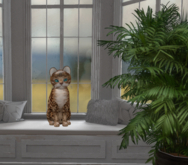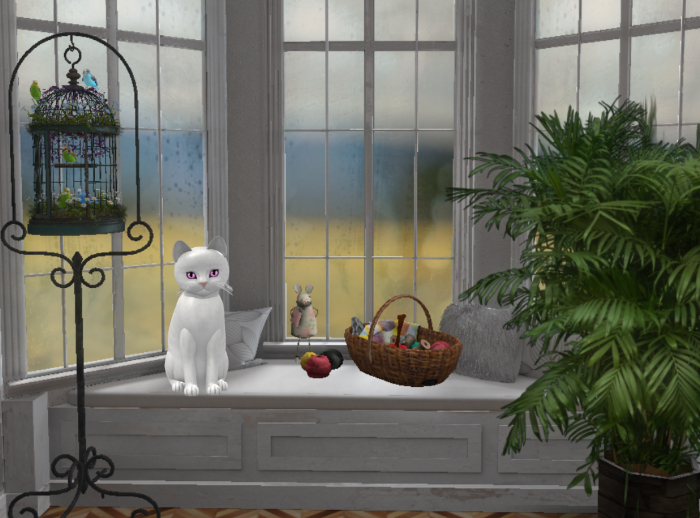

♂ Newborn
ID: 5b75665a-4438-62b4-7540-022395c501d2
Fur: Russian - White
Eyes: Gerbera Pink (Mysterious|Big)
Shade: Porcelain
Tail: Curious
Ears: Genesis
Whiskers: White (Guitar)
Size: Normal
Mother
Fur: Russian - White
Eyes: Gerbera Pink (Mysterious|Big)
Shade: Porcelain
Tail: Genesis
Ears: Vampire
Whiskers: White (Guitar)
Size: Normal
Father
Fur: Russian - White
Eyes: Odyssey Galactic (Mysterious|Small)
Shade: Illume
Tail: Puff
Ears: Genesis
Whiskers: Black (Guitar)
Size: Normal
Real-Life Facts on the Russian Cat
With their shimmery blue coats, striking emerald eyes, and possible ties to Russian czars, Russian Blue cats can’t help but have a certain air of elegance. However, if you’ve spent time with one of these gorgeous kitties, you know they’re as sensitive and caring as they come – and clever, too. In fact, the more you learn about Russian Blues, the more there is to love.
Russian Blue Cats: The Basics
Russian Blue cats belong to the same classification as the British Blue Cat, the Chartreux of France, and the Korat of Thailand. However, they are a distinct breed with unique characteristics. Russian Blues stand out because of their bright green eyes. They are also slenderer in build with a wedge-shaped head, while their blue cousins tend to be stockier and rounder in the face.
These cats grow to be approximately 10 inches tall and weigh 7-15 pounds, but how long do Russian Blue cats live? They can live 15-20 years – if not longer, if well cared for. These kitties are also referred to as Archangel Blues, Foreign Blues, or Maltese Cats.
Origin
The Russian Blue Cat is a naturally occurring breed, so we’ll never know its origin. However, they likely originated somewhere in northwest Russia. One theory is that these sleek felines descended from the esteemed pets of the Russian czars. Sadly, others speculate that the first Russian Blues lived in the wilderness and were hunted for their prized pelts – such thick, dense fur with unique coloring would have brought in the big rubles.
In any case, it’s believed that Russian sailors befriended the felines sometime around the 1860s and brought them aboard their ships as companions, most notably in the bustling port city of Arkhangelsk. This could explain how the breed came to Great Britain and Northern Europe. Arkhangelsk translates to “Archangel,” which explains how these cats earned themselves a fun nickname.
History
Once Russian Blue cats reached Great Britain, the breed took the cat world by storm. In 1875, Russian Blues were shown at one of the world’s first cat shows at London’s Crystal Palace. They didn’t win any prizes but left quite an impression – mainly that they were incredibly handsome.
In 1912, around the same time these cats made their way to the U.S., they were officially recognized as a breed.
KittyCatS Online Cattery
The KittyCatS! Online Cattery serves as a "one-stop" solution for keeping, breeding, and storing your cats! It's a great option to keep your cats or boxes, rather than in your inventory or on your land, and it's FREE!
Download instructions View Video »